Cradle Cap to Cuddles: Navigating the First Year with Confidence
The first year with your baby is a beautiful blur. One minute you’re staring in awe at a tiny newborn burrito swaddled in a hospital bassinet, and the next you’re googling “How do I baby-proof my entire life?” at 2 AM. It’s fast. It’s intense. And it’s full of stages that hit differently—from the first gummy smile to the first solid poop (which, by the way, no one prepares you for).
So let’s slow it down and break it up. This isn’t just about milestones or textbook growth spurts—it’s about what actually happens during that whirlwind first year, how it affects you and your baby, and why even the smallest moments (yes, even the diaper blowouts) matter more than you think.
1. The Newborn Blur (0–6 Weeks): When Time Loses All Meaning
You’re learning to keep a human alive. No pressure.
In these first few weeks, everything is new, especially for you. Feeding takes over your world, whether you’re nursing, bottle-feeding, or doing both. Sleep is broken into unpredictable chunks, and you’ll quickly discover that burping is more of an art than a science.
Your baby? They’re learning too. Their eyesight is fuzzy, but they know your smell. They sleep a lot—about 16 to 18 hours a day—but not always when you want them to.
What’s going on developmentally?
- Reflexes like rooting, grasping, and startle are in full swing.
- Crying is their only language, and it’s fluent.
- Their skin is sensitive and peeling—completely normal, by the way.
How can you help?
- Keep them close with skin-to-skin contact (good for both of you).
- Let go of routines for now; you’re both still calibrating.
- Take help when it’s offered—your superhero cape can wait.
2. The Awakening (6 Weeks to 3 Months): Hello, Personality
Suddenly, your baby has opinions.
This is when things start getting interesting. Your baby is becoming more alert, holding eye contact longer, and maybe even flashing a little smirk that isn’t just gas. You might start hearing coos and gurgles that melt your exhausted soul.
This stage also introduces the infamous “witching hour” (usually in the evening) when fussiness peaks and nothing seems to help. You’re not doing anything wrong. It’s normal. It passes.
What’s going on developmentally?
- Vision sharpens—they might track objects or faces now.
- Sleep begins to consolidate (emphasis on begins).
- They start recognising your voice—and even your laugh.
How can you help?
- Create a gentle sleep-wake routine (don’t expect perfection).
- Talk to them constantly—they’re soaking it all in.
- If skin issues like cradle cap or baby acne pop up, keep it simple with products designed for newborns. And if you’re wondering how to protect skin barrier without overloading your changing table, think minimal: fragrance-free cleansers, soft cloths, and a good baby-safe moisturiser go a long way.
3. The Rolling Stage (3 to 6 Months): The Mobility Tease
They’re not quite mobile, but they’re working on it. Hard.
This is the golden stretch where your baby is more predictable, more responsive, and just—let’s be honest—a little easier. Naps may start to find their rhythm, and you’ll probably settle into something that resembles a routine. Don’t get too comfortable, though. Just as you do, your baby will start rolling over or pushing up during tummy time.
Also, drool. So. Much. Drool.
What’s going on developmentally?
- They start grasping and mouthing toys, exploring through touch.
- Core strength increases—they may roll from belly to back or vice versa.
- Social smiles deepen; some babies even giggle.
How can you help?
- Encourage tummy time, even if they hate it at first.
- Offer safe teething toys to soothe sore gums.
- Narrate everything you do—changing diapers, making coffee, folding laundry—because language development is already underway.
4. The Solid Shift (6 to 9 Months): Food, Feelings, and Falling Over
Solids start. So does chaos.
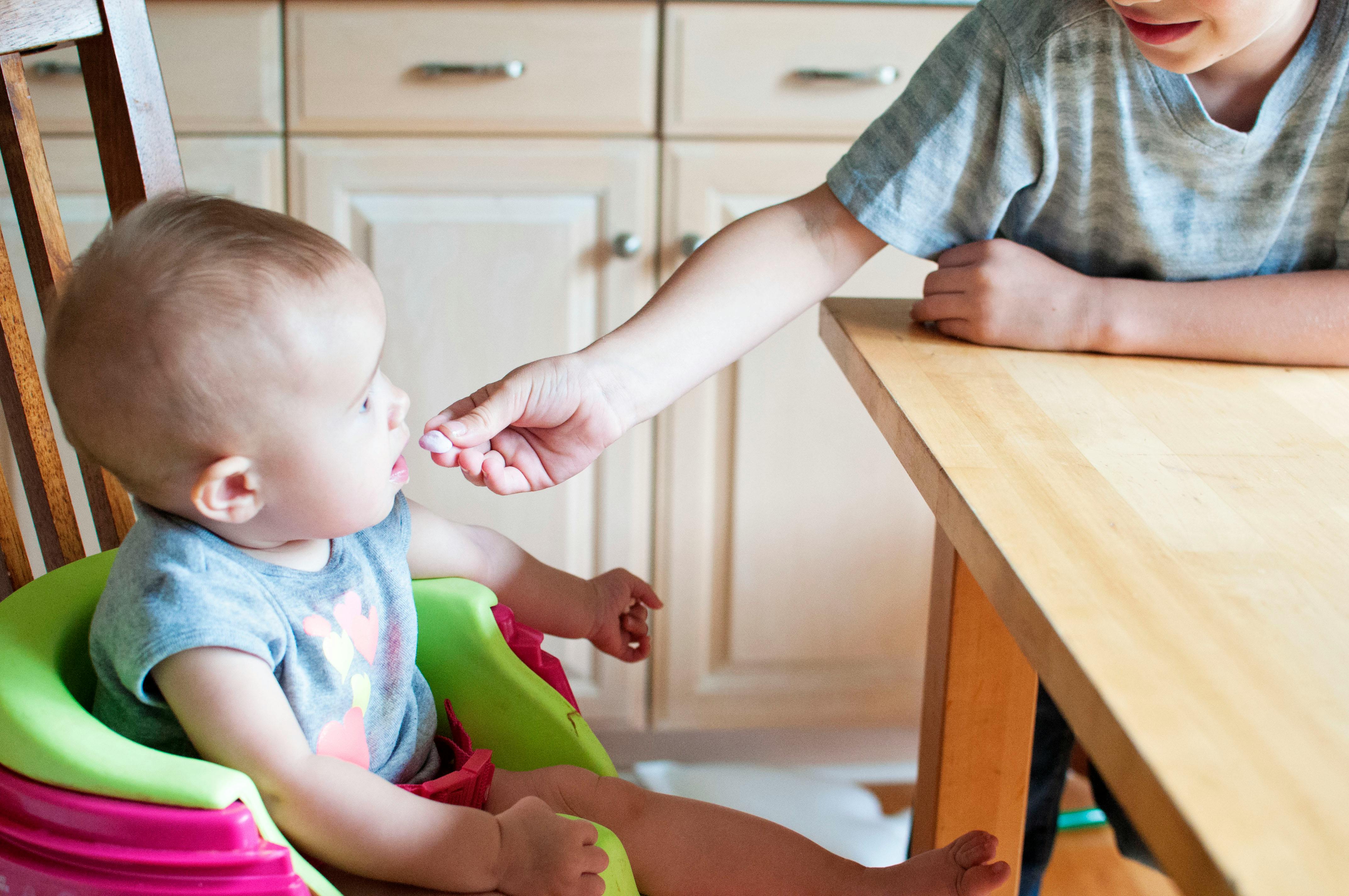
One minute you’re pureeing peas, the next you’re dodging them as they get flung across the room. Welcome to the world of solids. Whether you go the baby-led weaning route or prefer spoon-feeding, this stage introduces a whole new realm of taste, texture, and mess.
Your baby is now sitting (with or without help), grabbing everything, and becoming noticeably more attached to you. Separation anxiety might rear its head here—completely normal and healthy.
What’s going on developmentally?
- Fine motor skills improve; the pincer grasp begins.
- Solid foods become a sensory playground.
- Stranger anxiety and strong attachments emerge.
How can you help?
- Introduce one new food at a time—watch for reactions.
- Let them play with food. It’s not “playing,” it’s learning.
- Validate their feelings when they cry for you—it builds trust, not “spoiling.”

5. The Cruising Zone (9 to 12 Months): Almost a Toddler, Still a Baby
They’re mobile, opinionated, and loud about it.
By this stage, babies are often crawling, pulling themselves up, or cruising along furniture like tiny drunk sailors. You’re suddenly hyper-aware of every sharp corner, loose cord, and unanchored bookshelf.
Communication is more deliberate now. They wave, clap, and may even say “mama” or “dada” with intent. They also start testing limits—drop something, watch your face. Drop it again. Still watching. Yeah, it’s a game. For them.
What’s going on developmentally?
- Language explodes (even if it’s mostly babble).
- Gross motor skills accelerate—some may even take their first steps.
- Emotional range expands—they show frustration, joy, and curiosity.
How can you help?
- Offer support for standing and cruising safely.
- Create a baby-safe exploration zone—they need freedom to fall a little.
- Read every day, even if it’s the same book 14 times. Repetition = learning.
Final Thoughts: Your Year of Tiny Triumphs
There’s no one-size-fits-all roadmap for your baby’s first year. Some will crawl at six months, some at ten. Some will sleep through the night at three months (unicorns, really), others won’t until after one. It’s all normal. It’s all yours.
Here’s what matters most: You’re showing up. You’re learning. You’re loving that tiny human in big, imperfect ways—and that’s more than enough.
So, from cradle cap to cuddles and all the chaos in between, take a breath. You’re doing just fine.