How to Improve Home Accessibility on a Modest Budget
Making a home easier to live in when mobility becomes a challenge can feel daunting, especially when you start thinking about the potential costs. Many people imagine expensive building work, high-tech equipment, or complete room overhauls. While some changes do require investment, there is a lot you can do on a modest budget that will make daily life easier and safer.
Accessibility isn’t just about big, visible adaptations. Often, the most meaningful improvements are the small, thoughtful changes that help someone move around their home with confidence. If you are helping an ageing parent, supporting someone after an injury, planning ahead for your own needs, or are just curious, here are some ideas that will not break the bank.
Start with the Easy Wins
Before looking at major upgrades, focus on the small things you can change straight away. These tweaks cost very little and can reduce the risk of trips, slips, and everyday frustrations.
- Good lighting – Replace dim bulbs with brighter LED ones, and add motion-sensor lights in areas like hallways and staircases so nobody is fumbling for a switch in the dark.
- Clear the paths – Walk through the home and notice anything that gets in the way — small tables, cluttered shelves, piles of shoes. Keeping walkways clear is one of the simplest ways to improve safety.
- Tidy cables and rugs – Secure loose cables along the wall and replace or remove rugs that slide around easily.
These are changes you can often make in a single afternoon, yet they set a solid foundation for a safer, more accessible home.
Make Bathrooms Safer
Bathrooms can be tricky for anyone with limited mobility. Wet floors, slippery tiles, and low fixtures all increase the risk of falls. The good news is that you do not need a full remodel to make a bathroom safer.
Install grab bars near the toilet and in the shower or bath. They give a steadying handhold without taking up much space. Add non-slip mats both inside and outside the shower. For those who tire easily or struggle with balance, a shower chair can make washing a more comfortable and less stressful experience.
If you can stretch the budget a little, a handheld showerhead is worth the investment. It is easy to install and makes personal care simpler for both the user and anyone offering assistance.
Improve Access to the Home
Getting in and out of the house should be straightforward. If steps are a problem, a portable ramp can be a quick, affordable solution. They are especially helpful for wheelchair users or anyone using a walking frame.
Inside the home, even small changes to doorways can make movement easier. While widening a doorway can be costly, replacing round doorknobs with lever handles is a budget-friendly swap that makes opening doors much easier for people with arthritis or limited grip strength.
Make Stairs Less of an Obstacle
For many people, stairs are the biggest challenge in the home. Simple fixes like adding sturdy handrails on both sides can make a difference, but sometimes a bigger solution is needed.
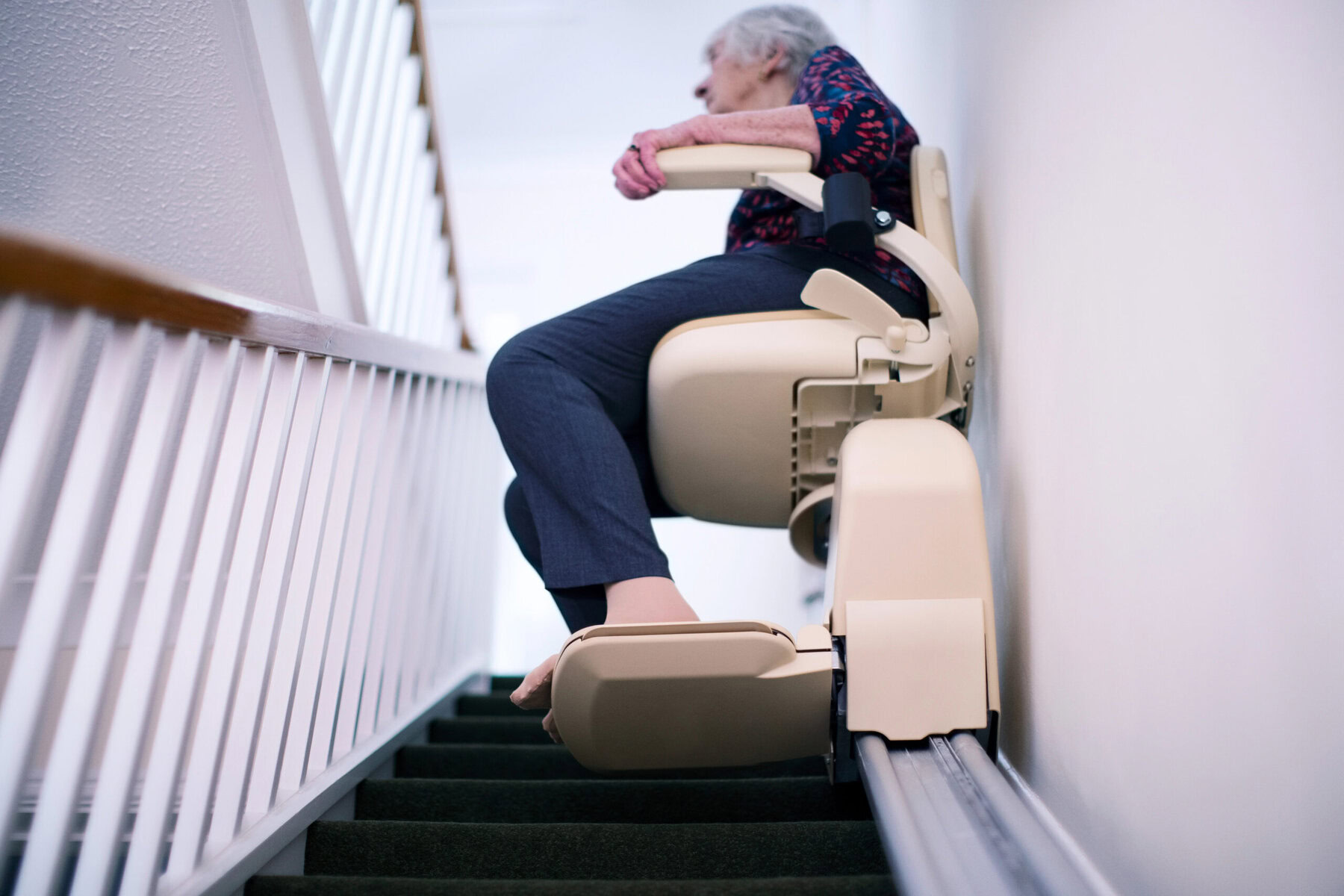
A stairlift can completely change how someone uses their home, allowing them to move between floors safely and independently. Many assume they are too expensive, but prices vary depending on the model and the type of staircase.
Want to learn more? Read Halton Starlifts’ blog covering the cost of a stairlift in the UK to help you learn what to expect and how to budget for one.
Rethink the Kitchen Layout

The kitchen is one of the most-used rooms in any home, so accessibility here is key. Start by storing everyday items (tea, coffee, mugs, plates) at waist height so they can be reached without bending or stretching.
Pull-out shelves or baskets inside cupboards make contents much easier to access. If you are replacing appliances, look for designs that are easier to operate, like ovens with side-opening doors or controls placed at the front.
Even small changes, like adding a stool so someone can rest while cooking, can make the kitchen a more comfortable space.
Think About Flooring
Flooring might not be the first thing you consider, but it can have a big impact on safety. While carpet offers grip, it can be hard to move over with a wheelchair or walking frame. Smooth flooring, such as vinyl, is easier to navigate but can be slippery.
If replacing floors is not in the budget, strategically placed non-slip mats or adhesive strips in high-traffic areas can improve safety without a full refit.
Look for Financial Help
Home adaptations can be expensive, but there may be funding available to help. In the UK, the Disabled Facilities Grant can cover part or all of the cost of major adaptations for eligible households.
Local councils, charities, and healthcare organisations may also have schemes to support accessibility improvements. It is worth spending time looking into these options before paying for everything yourself.
Plan with the Future in Mind
When you make changes, think about what will be useful in the coming years, not just today. Choosing flooring that works for wheelchair use now, even if it is not needed yet, can save money later.
The same goes for fittings like wider doorways or reinforced walls that can take the weight of future grab bars. Forward planning means fewer expensive alterations down the line.
Affordable Solutions for a More Accessible Home
Improving home accessibility on a modest budget is about working smarter, not spending more. Start with simple changes that remove everyday hazards, then make targeted investments in areas that will have the most impact on independence and safety.
Whether that is upgrading bathroom safety, improving kitchen usability, or exploring mobility solutions, the aim is to create a home where the person feels confident and supported. Accessibility does not need to come with a high price tag, but the benefits it brings to comfort, safety, and dignity are priceless.


